
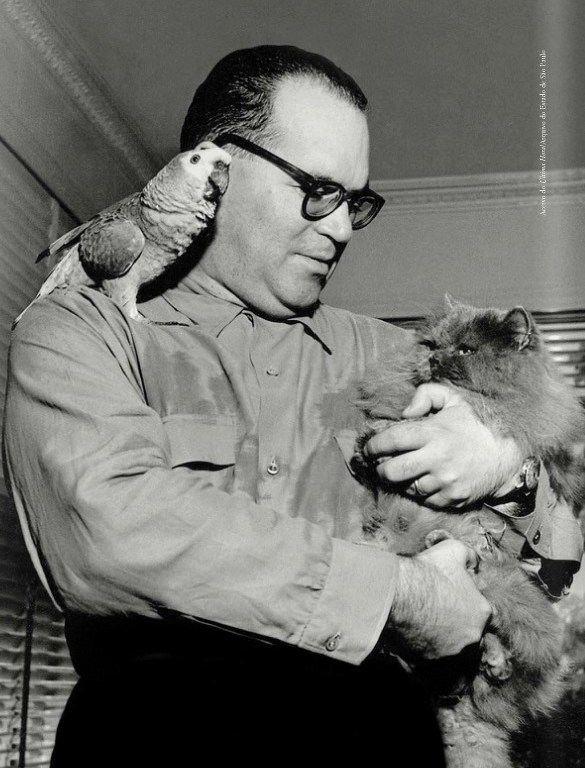
João Guimarães Rosa is one of the names of Brazilian literature you absolutely need to know. Most known for his best-seller The Devil to Pay in the Backlands, he also published short stories and poetry.
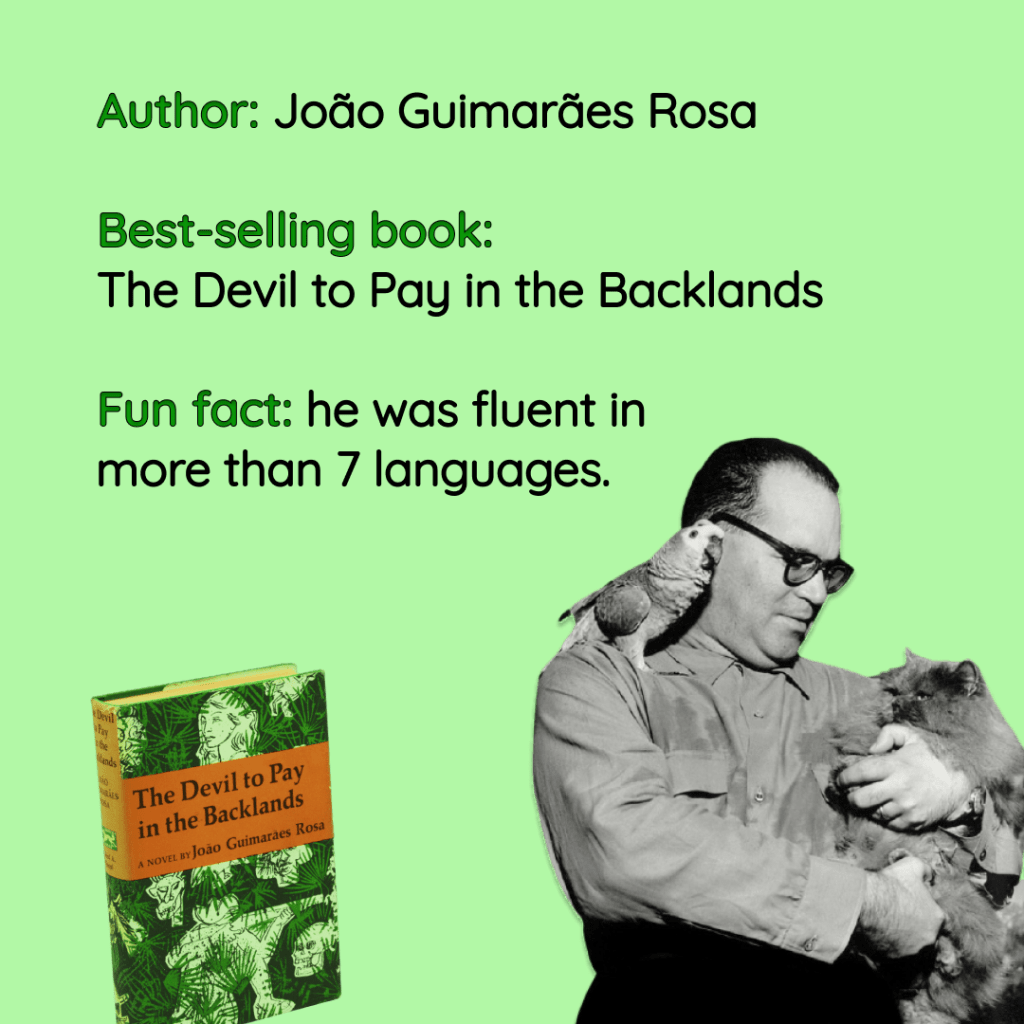
I decided to discover this author through his verses, a collection of poems called Magma, published posthumously in 1997. In his lifetime, João Guimarães Rosa never thought his work was worth publishing, although today it is considered to be one of the best poetry collections written in Portuguese. His lyrical language can easily transport you to another world.
Reading his poetry, you will dive into Brazilian history and Indigenous culture.
Here’s what he said about his poetry:
“The Poet does not quote: he sings. He does not alienate himself, like a lunatic, from collective and contemporary disturbances […]. The magma, inside, reacted, took on a life of its own, individualized itself, freed itself from my lack of love and became an autonomous creature, with whom maybe I no longer agree.”
Expect everything from this Brazilian genius and don’t be surprised if you find something hard to understand: his work is full of cultural references, as well as of Greek and Arabic mythology.
Rosa was an ambassador and spoke more than 7 languages, so he made sure to include all his knowledge in his lyricism. In Magma, you will find poems praising nature and describing Indigenous people’s special contact with their land. His fascination for the Indigenous culture was so big that he even wrote verses in nheengatu, one of the indigenous languages of Brazil.
This collection also contains haiku poems – life secrets contained in only three lines. Simple, short and mesmerizing:
Se fosse só eu
a chorar de amor,
Sorriria…
If I was the only one
To cry out of love,
I’d smile…
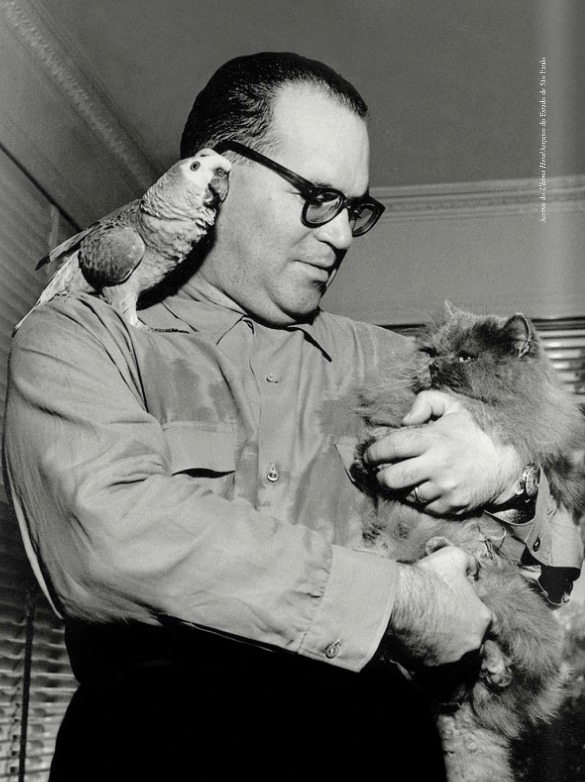
Rosa wrote about ephemerality of life, comparing it to nature’s eternity. He also praised love and all of its forms reflected in nature. Parrots, bulls, rain, wind, different colors and shapes are equally present in his verses, giving a deep audio-visual dimension to his work.
Even though the language can be hard to read and the cultural references difficult to understand, make sure you enjoy discovering one of the greatest Brazilian poets and novelists.
I promise you’ll feel like you’re part of the Amazon rainforest just by reading his first lines, and that is precisely the magic of great writers.
 Art of Saudade