
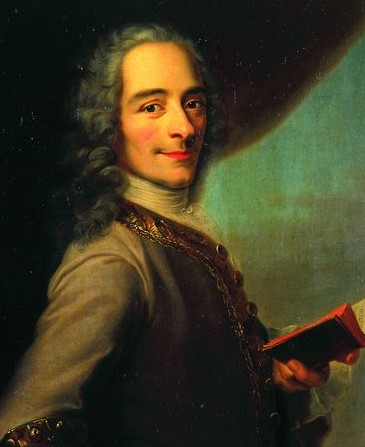
18th century France: the socio-economic injustice becomes so unbearable that there are only two solutions. A revolution takes place in 1789 when an aggressive mob attacks the Bastille, and a literary revolution – the one that seems silent and pacific, yet is more powerful than a guillotine.
Voltaire was one of the authors who dared to criticize every rotten detail of the French society, starting from corruption, clerics’ hypocrisy, colonies, wars, to social classes and philosophical, unrealistic optimism. Voltaire’s words are clearly exposing all the hypocrisy through his favorite literary tools: irony, cynicism, and sarcasm. One could laugh and cry at the same time reading his works, where tragedy and humor are equally present.
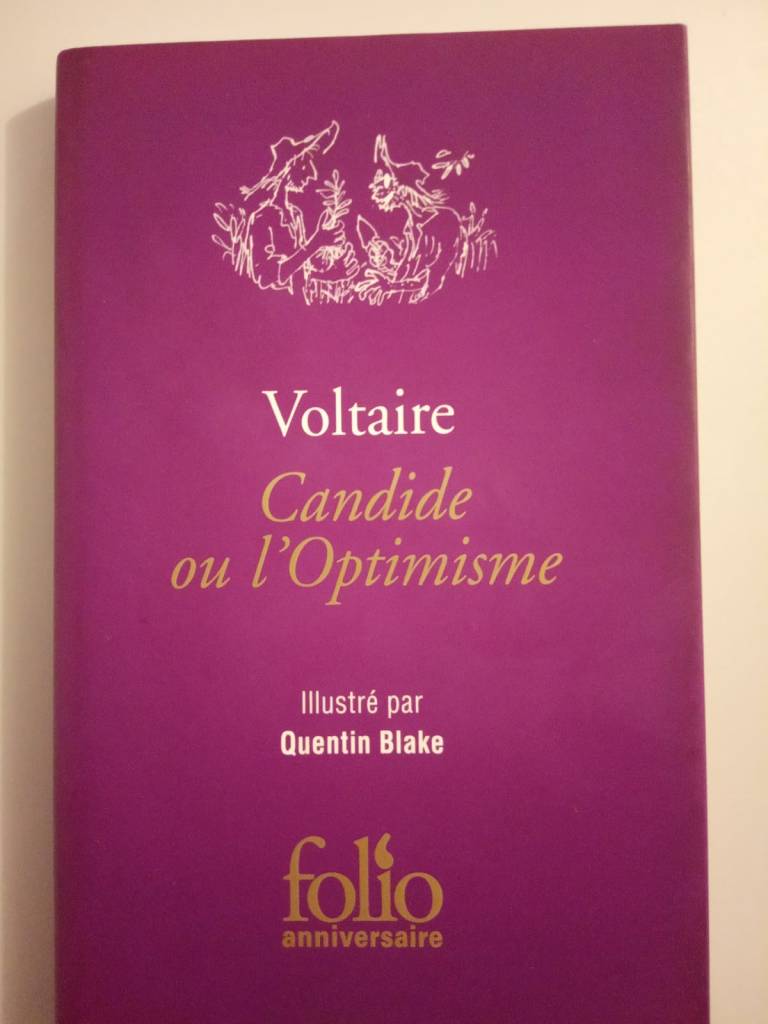
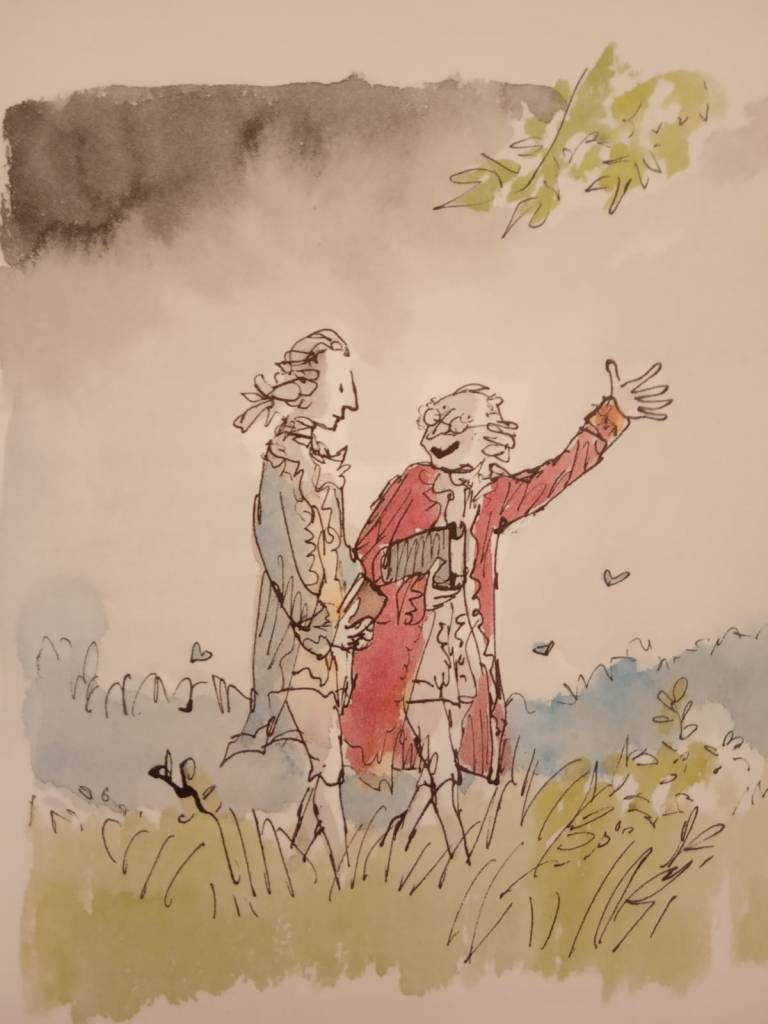
Voltaire narrates the story of a young, naïve man called Candide (the name itself means “fair-minded”) and his teacher Pangloss (his name is also a reference to his character – unreasonably optimistic).
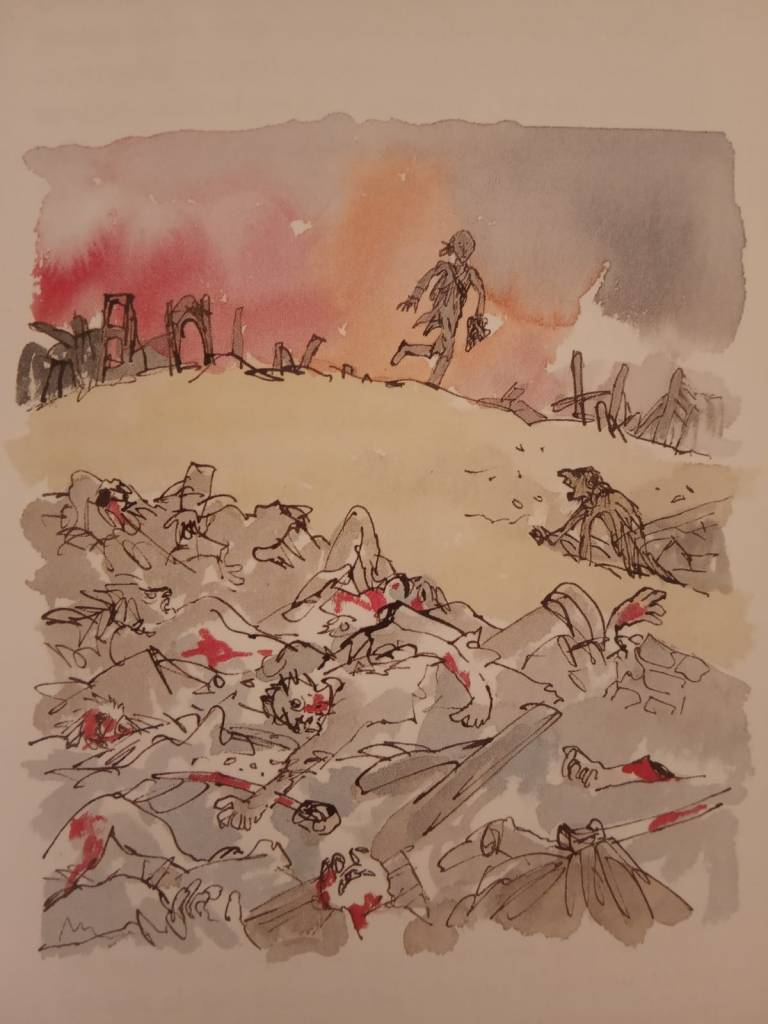
From the very first page, Voltaire makes use of irony to parody Leibniz’s philosophy and especially his thesis that “the existing world is the best world that God could have created”. Voltaire proves that this theory is absolutely hilarious by making his character experience the biggest misfortunes one could ever imagine. After being kicked out of the castle where he lived his whole life, Candide is forced to survive in a whole new and cruel world, being a witness to horrible war scenes and far away from his beautiful Cunégonde.
However, he never forgets his teacher’s philosophy and his optimism is what keeps him alive. Even though they both suffer from the Inquisition and hear stories of miserable people, Candide never stops repeating to himself that “this world is the best of all possible worlds”. After his teacher’s execution, Candide and his valet Cacambo reach Eldorado, the mythical city of gold. Voltaire is explicitly mocking the Europeans of his time thirsty for gold, ready to exploit and abuse to satisfy their never-ending materialistic desires. The author is preparing the readers for horrendous scenes, describing the unfortunate condition of the slaves. Candide’s dialogue with the slave from Surinam is one of the most disturbing passages of the book.
“Twice a year we are given a pair of blue canvas drawers, and this is our only clothing. When we work in the sugar mills and get a finger caught in the machinery, they cut off the hand; but if we try to run away, they cut off a leg: I have found myself in both situations. It is the price we pay for the sugar you eat in Europe.“
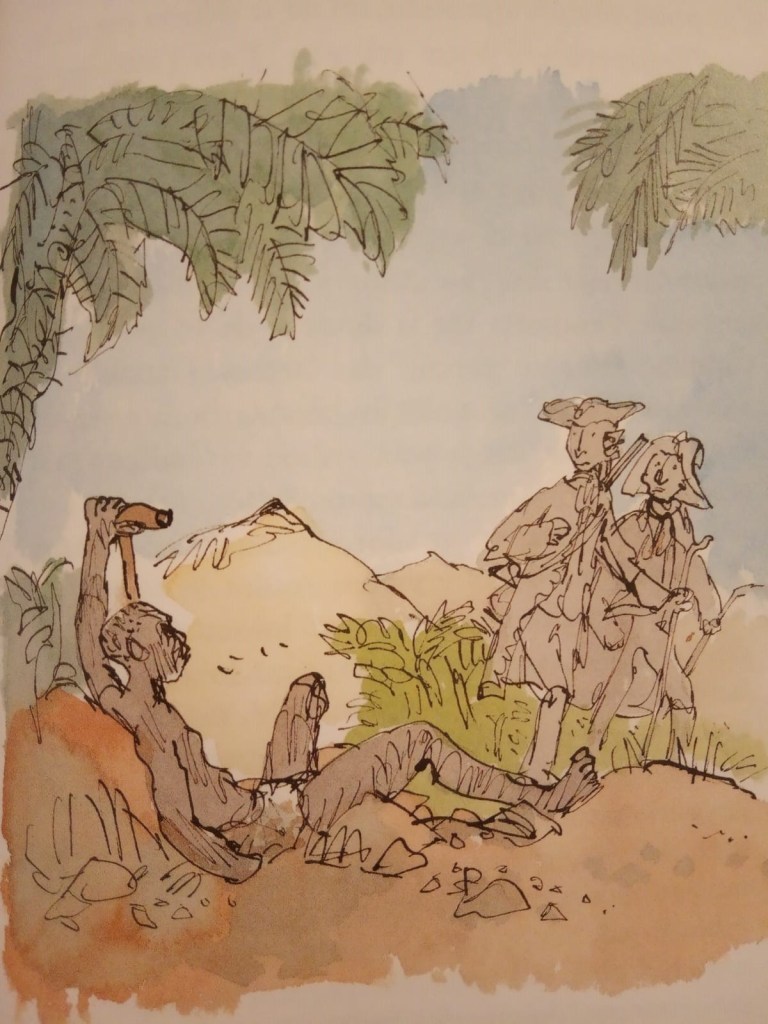
The last phrase makes us realize that not much has changed over the last few centuries. We could perfectly use the same phrase to describe today’s exploitation, in another form. Who pays the price for the food we eat, the clothes we wear, and the phones we use today? But that’s an entirely different topic…
Throughout the book, Candide travels around the world and witnesses all sorts of injustice: crime, murders, racism, and besides his strong optimism, he is forced to accept reality as it is. His last stop is Constantinople, where the main characters from the beginning are miraculously gathered together, including his teacher Pangloss. Their final mission is to find the meaning of life, as they finally reached happiness and eventually got bored. They consult a Sufi scholar who doesn’t seem to care about their trouble. The answer to their biggest question is finally given by a simple farmer whose happiness consists in ploughing his field.
“Work spares us from three evils: boredom, vice, and need.”
In the end, Candide comes to a great conclusion: “we must cultivate our garden” – we must work on ourselves, embrace reality and stop being the prey of illusions. The world is certainly not a perfect place, but that’s one more reason to act. Now.
 Art of Saudade
3 thoughts on “French literature #1: Candide by Voltaire – the master of irony”