
In Brazilian music, there is a philosophy that transcends the mere notes and rhythms—it is an ethos of joy in the face of adversity, and of a profound belief that amanhã um lindo dia vai nascer—tomorrow, a beautiful day will rise.
During the military dictatorship of the 1960s and ’70s, when censorship drove many artists into exile, the music of Brazil became a quiet defiance against the oppressors. Even amid the most oppressive regimes, music remained a vital weapon of protest, a living testament to the vitality of a people determined not only to survive but to preserve their souls.
It is against this backdrop that the music of Chico Buarque stands as an enduring symbol of Brazilian artistic resistance. In his work, Buarque offers more than just melody and poetry—he crafts a visceral, almost cinematic experience. One of his most enduring songs, Construção (1971), serves as a remarkable meditation on the working class, but also a masterclass in musical storytelling.
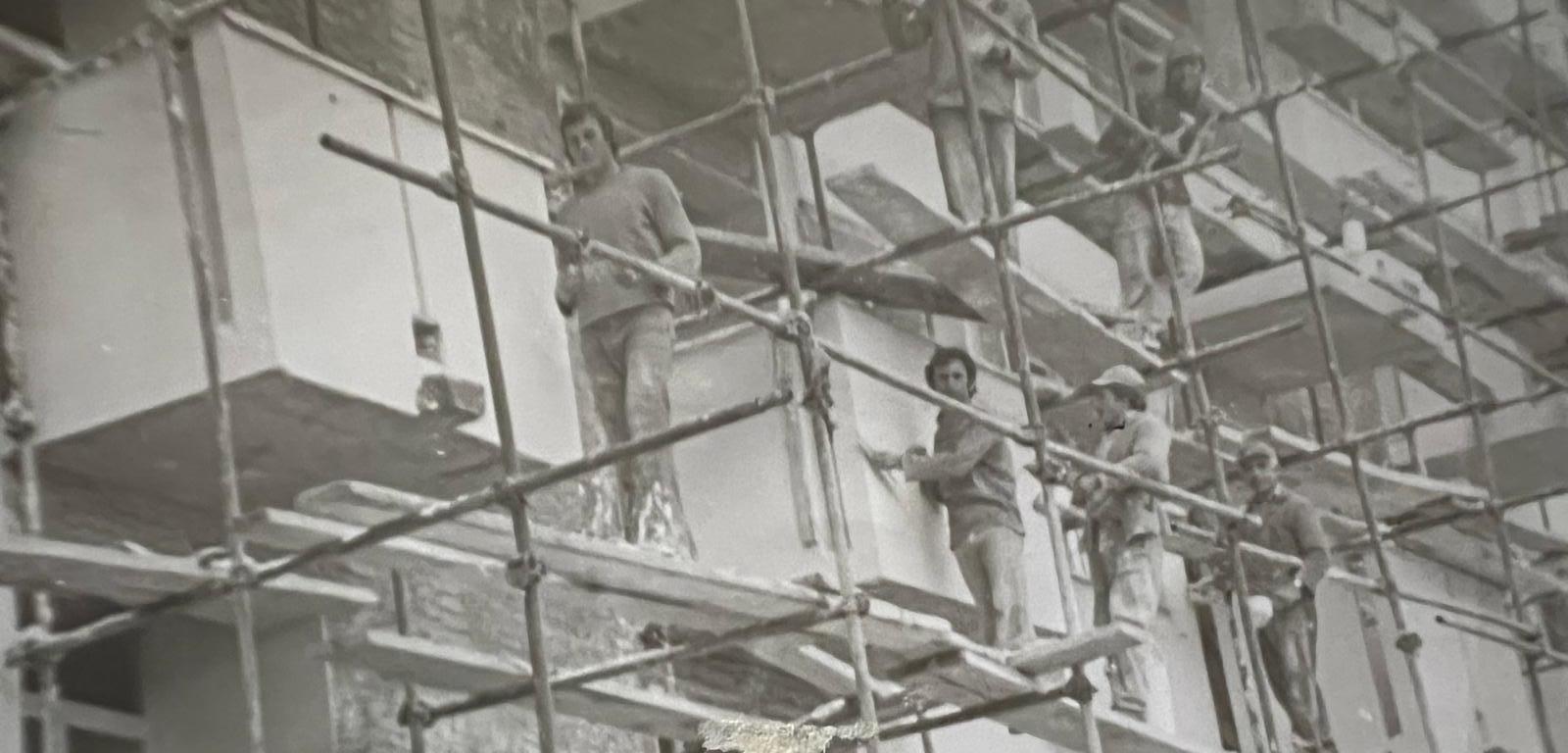
On the surface, Construção tells the story of a construction worker going about his daily labor: brick by brick, life is built. As the worker navigates the dangerous, soul-crushing work of constructing buildings, his life becomes a metaphor for the harsh realities of existence. But the genius of Construção lies not only in its lyrics but in the way Buarque constructs the very rhythm of the song to reflect the intensity of the worker’s plight. What begins as a gentle bossa nova rhythm, characteristic of Brazil’s bossa nova and MPB traditions, slowly transforms into something far more forceful. The song’s rhythmic pulse begins to accelerate, swelling into an orchestral crescendo that mirrors the building tension and frustration of the narrative. It is, in essence, a symphony of suffering and survival.
In the early moments, the song flirts with the listener, almost coaxing them into a sense of ease with its melodic, lullaby-like guitar. But as the story unfolds—brick by brick, tijolo com tijolo—we begin to feel the weight of each movement, the danger of each step, the fragility of existence itself. Buarque’s haunting refrain, Por esse pão pra comer, por esse chão pra dormir, a certidão pra nascer, a concessão pra sorrir (“For this bread to eat, for this ground to sleep, the birth certificate to be born, the permission to smile”) speaks of the worker’s plight: the constant struggle for survival, for the very right to exist. The music becomes a kind of unbearable tension, echoing the worker’s own sense of existential dread and longing.
The more the song unfolds, the more the rhythm becomes inextricably tied to the story. The gentle guitar gives way to a full-blown orchestral arrangement, and the choir’s voices swell in a tragic, operatic crescendo, building to a moment of such emotional intensity that it is almost impossible not to feel the weight of history in every note. The rhythm, once subtle and understated, now becomes an unstoppable force. It is as though we are swept into the very heart of the worker’s struggle, caught in the rising storm of oppression and despair. The music’s transformation mirrors the trajectory of the worker’s life—at first timid, then violent, then, finally, overwhelming.
This seamless integration of rhythm and narrative is what makes Construção not just a song, but an opera, a story that unfolds not only through words but through the very cadence of the music itself. It becomes a kind of literary work, a story told through music in the purest sense. And it is this blend of rhythm and lyricism that makes the song feel timeless. Each listener, regardless of their familiarity with Portuguese, is drawn into the visceral emotion of the music, the pulse of resistance that vibrates beneath every word.
This is where the genius of Chico Buarque lies: in his ability to transcend the boundaries of musical form and, through the sheer power of his storytelling, turn a simple narrative into something far more universal. The song is a reminder that storytelling, in all its forms—whether it is literature, music, or poetry—can create connections that transcend time, place, and language. As Buarque weaves his tale of the working man, we are reminded of the universal human experience of struggle, survival, and hope. Construção becomes, in its purest form, a story of resilience.
When debates arise about whether musicians deserve literary accolades, as was the case with Bob Dylan’s Nobel Prize or Buarque’s recent Camoes Prize for best Portuguese-language author, the question often emerges: should music be considered literature? The answer, for me, is unequivocally yes. In Construção, Buarque is not just a musician—he is a poet, a storyteller, a chronicler of life’s most painful truths. His words resonate with anyone who has ever experienced hardship, anyone who has ever fought for a better tomorrow. Music is literature when it connects us to our shared humanity, when it transcends the written word and becomes something felt in the soul.
For me, Construção is intensely personal. My both grandfathers were construction workers, and as I listen to the lyrics, I am transported back to the stories my grandmothers used to tell about their struggles—stories that were passed down through generations in the form of words, poetry, and music. There is power in this connection, in the way art can capture the essence of life’s most difficult experiences and make them immortal.

In the end, art is the most powerful weapon we have against oppression. It is the force that allows us to rise, even when everything seems to conspire against us. And when I listen to Construção, I am reminded of the power of music to tell stories that matter, to remind us of our shared humanity, and to offer us the strength to continue building, brick by brick, even in the face of adversity.
Without art, the world would be… incomplete. But with art, we find meaning, we find hope, and we find connection. And that, in the end, is what makes art—whether in music, literature, or any other form—so deeply necessary.
 Art of Saudade