
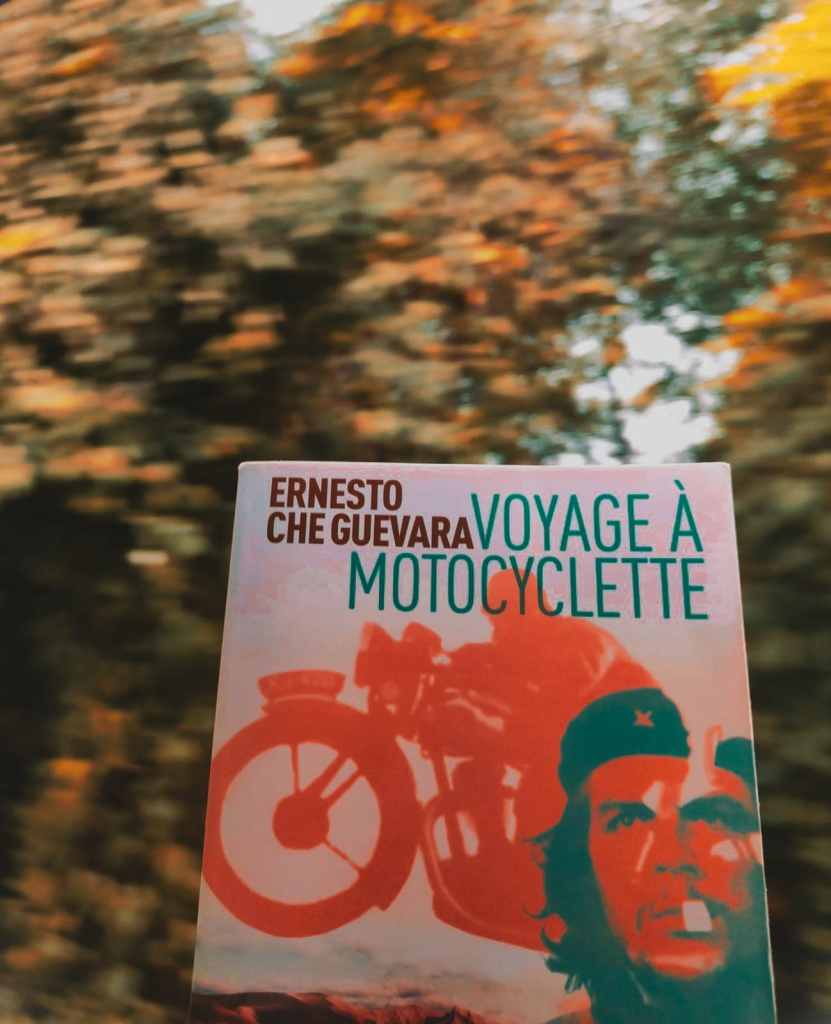
“I now know, by an almost fatalistic conformity with the facts, that my destiny is to travel…”
Che Guevara
“This young adventurer, endowed with a thirst for knowledge and a great capacity to love, shows us how reality, if well interpreted, can move a man to the point of changing his way of thinking.”, says Che’s daughter Aleida Guevara March in the preface to The Motorcycle Diaries. The posthumously published memoir reveals this iconic man’s passions: traveling and writing. Debating whether he was a hero or a criminal is not the intention of this post. The image of Che that the world needs to know is that of a passionate adventurer in love with life and justice.
“After graduation, due to special circumstances and perhaps also to my character, I began to travel throughout America, and I became acquainted with all of it. Except for Haiti and Santo Domingo, I have visited, to some extent, all the other Latin American countries. Because of the circumstances in which I traveled, first as a student and later as a doctor, I came into close contact with poverty, hunger, and disease; with the inability to treat a child because of lack of money; with the stupefaction provoked by the continual hunger and punishment, to the point that a father can accept the loss of a son as an unimportant accident, as occurs often in the downtrodden classes of our American homeland. And I began to realize at that time that there were things that were almost as important to me as becoming famous for making a significant contribution to medical science: I wanted to help those people.”
Many will call me an adventurer, and that I am…only one of a different sort: one who risks his skin to prove his truths.
Che Guevara
The year is 1952. Two medical students from Argentina decide to embark on a journey across South America. They have nothing but a free spirit and La Poderosa II, a Norton 500 motorcycle.
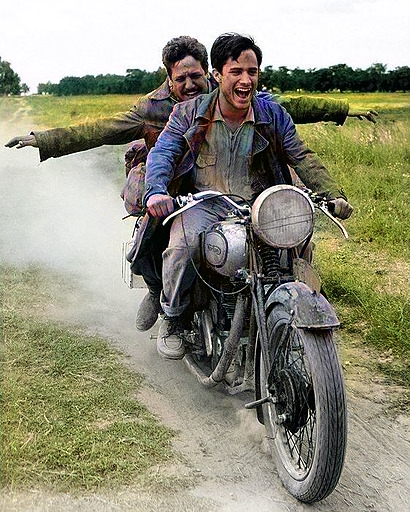
One of the audacious travelers is Ernesto Che Guevara, perhaps the most influential South American revolutionary of the 20th century. When the big expedition starts, he is only 23 years old. This enriching voyage will leave an eternal mark on the young Ernesto.
“This is how the journey was decided, a journey that has always been carried out according to the great principle established at that time: Improvisation.”
Ernesto Che Guevara, The Travel Diaries (1995)
You may not know that Che was an incredibly good writer. His descriptions are extremely rich and will surely transport you to culturally diverse Latin American soil.
The full moon appears on the sea and covers the waves with silver reflections. For me, the sea has always been a confidant, a friend who swallows everything we tell her without ever revealing the secret entrusted to her and who gives the best advice: a noise whose meaning everyone interprets as they can.
Ernesto Che Guevara, The Travel Diaries (1995)
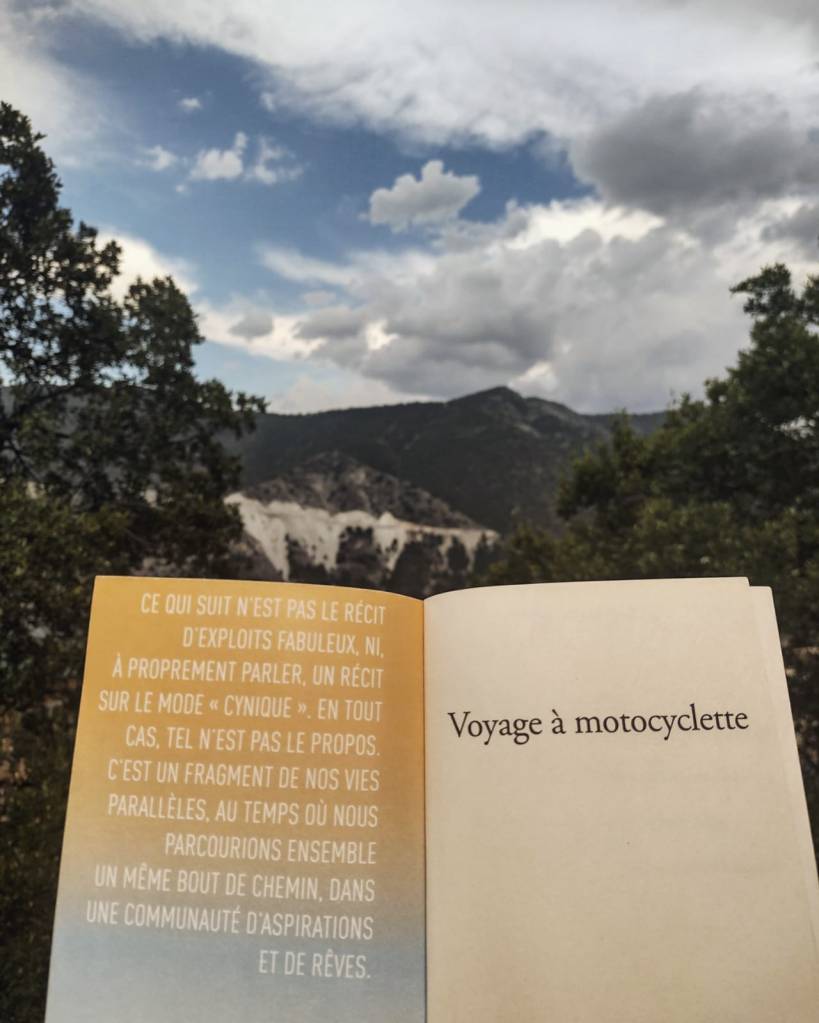
The whole universe was moving in rhythm, obeying the impulses of my inner voice; I was rocked by everything around me.
Ernesto Che Guevara, The Travel Diaries (1995)
On the challenge of travelling
The road was very bad and our poor bike was getting stuck in the sand. I was pushing it to get it out of the dunes. It took us an hour and a half to ride the first five kilometers, but the road got better and we were able to arrive safely…
Ernesto Che Guevara, The Travel Diaries (1995)
The Essentials of Che Guevara’s Travels
- A motorcycle
- His adorable friend Alberto
- Tons of mate (traditional drink in South America) 🧉
Che used to note down his first impressions of every new town or village that he visited.
Traveling around Latin America wasn’t as easy as it seemed.
For most of his destinations, he needed a lot of documents which his free-spirited personality refused to accept.
Unfortunately, their beloved Poderosa won’t endure the road. But their journey doesn’t stop here. Che won’t give up easily on the marvelous landscapes and cultures of South America.
“The day when two symbolic tears beaded on Alberto’s cheeks and when, after a last farewell to the Poderosa, we started our journey to Valparaiso on a magnificent mountain road, one of the most beautiful sites that civilization can offer when it takes the place of the real natural landscapes (understand: not soiled by the hand of man).“
Alberto and Che had a great vision: to travel and help people on the road. What they truly wanted was to use their medical knowledge in order to accomplish a noble mission. In Chile, people revered them as “the two Argentinian doctors traveling with their “Poderosa”. Losing their Poderosa meant, ironically, losing their power.
“We belonged to the old “wandering” aristocracy and we carried, like a business card, our diplomas that made a huge impression. Now it was over. We were just two bums with our backpacks and all the mud of the road stuck to our suits, like an aftertaste of our aristocratic condition.“
In Valdivia, they traveled fifty or sixty kilometers without finding water or the slightest shrub to take shelter during the hottest hours.
“The worst part was that we had no water to cook with or to prepare mate.”
The only problem encountered in Bolivia… there’s no mate! What a heartbreaking moment for the two Argentinians.
Meeting locals
“We were never welcomed so pleasantly, never had we found the bread they sold us so well, with a piece of cheese, nor the mate so restorative. For these simple people, in front of whom Alberto showed his title of doctor, we were a kind of demigods. According to them, we came from that famous Argentina, that wonderful country where Perón and his wife Evita lived, where the poor have all the same things as the rich and where the Indigenous people are not exploited or treated as harshly as here.“
In the land of Pachamama
In the land of Pachamama, the Earth Mother revered by the Aymara people in the Andes, Alberto and Che experience all kinds of weather. At one point they are even forced to walk about three kilometers in the snow. From Argentina to Chile and Peru, they find locals who don’t speak Spanish. Che defends the right of Indigenous people to educate themselves and their children in their native languages.
If you tremble with indignation at every injustice, then you are a comrade of mine.
Ernesto Che Guevara
Cuzco – The Navel of The World
The young Ernesto is fascinated by the remains of the glorious Inca past. Machu Picchu, he says, is the expression of a people of great genius and with solid mathematical intuition. Cuzco gives the peaceful, sometimes a little disturbing, impression of a dead civilization. Lima, on the other hand, is a city that has already buried its colonial past behind the new houses.

Che ended his trip alone in Miami, where he had to stay for a month, penniless. His father Ernesto Guevara Lynch, in the afterword, describes the emotional homecoming after the long and painful, yet rewarding road trip.
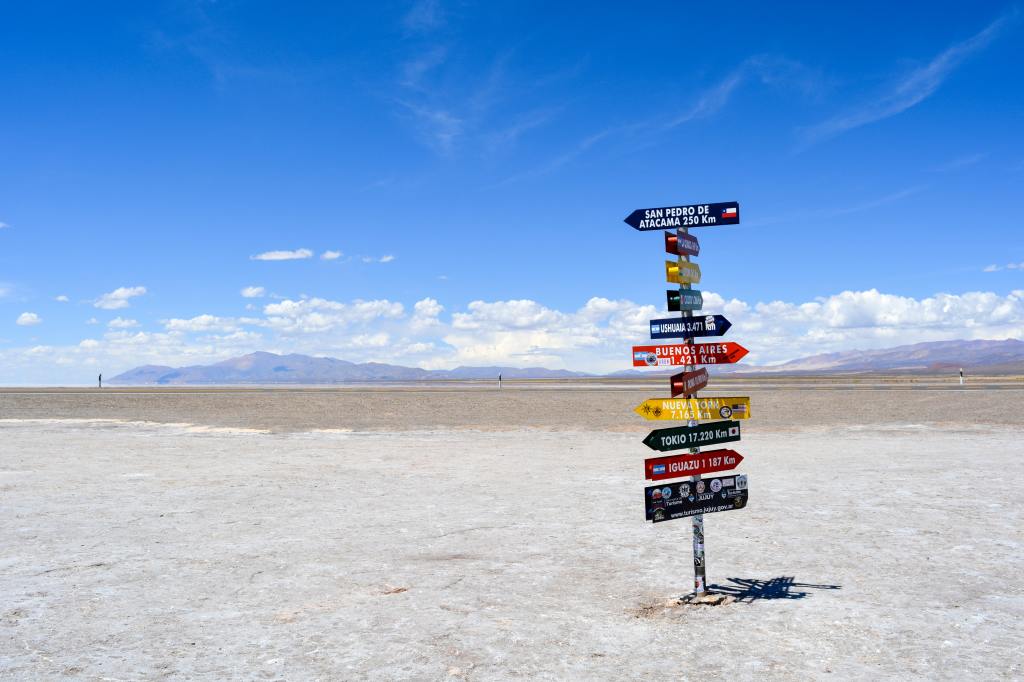
“Perhaps one day tired of circling the world I’ll return to Argentina and settle in the Andean lakes, if not indefinitely then at least for a pause, while I shift from one understanding of the world to another.”
Ernesto Guevara, The Motorcycle Diaries: Notes on a Latin American Journey
Did you like this post?
Buy me a cookie 🍪
Make a monthly donation
Make a yearly donation
Choose an amount
Or enter a custom amount
Your contribution is appreciated.
Your contribution is appreciated.
Your contribution is appreciated.
 Art of Saudade