
Whenever we think of Brazil, the first thoughts that come to our mind are usually its stunning beaches, carnaval, and beautiful warm weather. We always tend to associate this image with happiness. But what does Brazilian music tell us about happiness? Listening to samba can certainly boost some serotonin and lift your mood, but have you ever thought of the origins of this famous Brazilian music genre?
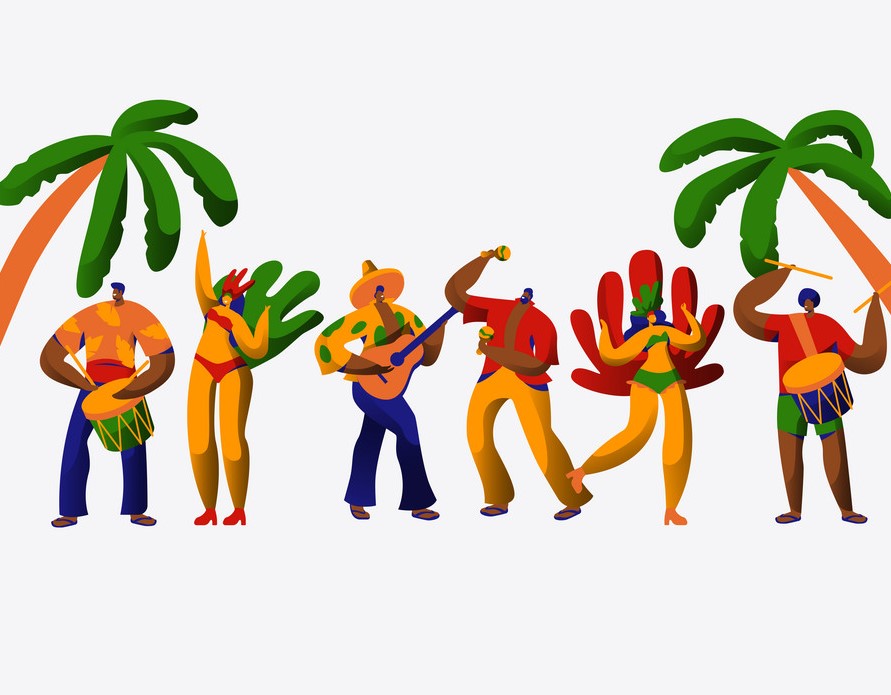
Samba originates from the religious dances practiced by the West African people who were enslaved and brought to Brazil during the Portuguese colonization. The evolution of samba is related to African candomblé’s traditions and Brazilian modern music is still related to its ancient roots. In addition to samba, Brazil has some of the most beautiful music genres, such as MPB, bossa nova, sertanejo, pagode, forró, frevo… and the list goes on.
If we look at its history and evolution, it’s hard to link any image of happiness to samba. Yet, the very lyrics and its rhythm always spread positive vibrations. The secret lies in what makes the humankind rise like a phoenix from the ashes : hope. As Jorge Ben himself says in one of his songs, “se a reza é forte, você vai ver que amanhã um lindo dia vai nascer” (if the prayer is strong, you’ll see that tomorrow will be a beautiful day).
Even though it sounds delusional, samba and bossa nova taught me how to cope with sadness. In fact, avoiding sadness is absolutely not this music’s goal. I always say that Brazilian music has soul, and this soul is nostalgic and deeply melancholic. A culture that has an authentic word which stands for a special, complex, deep emotional state of nostalgia such as – saudade, shows us its rooted melancholy present in the customs, traditions and music. As happiness is a state of mind that should be a by-product, the purpose of life should not be running away from sorrow at any price.
Here is what Vinícius de Moraes, described with his own words as a “poet-diplomat” says about happiness :
“A felicidade é como a gota
De orvalho numa pétala de flor
Brilha tranquila
Depois de leve oscila
E cai como uma lágrima de amor”
[Happiness is like a dewdrop on a flower petal. It shines quietly, then swings lightly and falls like a teardrop of love]
One of the most common words in Brazilian music are, without doubt, ‘tristeza’ and ‘alegria’ [sadness and happiness] and this is why to me it represents a beautiful contradiction.
Deixa a tristeza pra lá
Canta forte, canta alto
Que a vida vai melhorar
[Sing sing, my people, leave the sadness behind, sing strongly, sing loud, because life will get better]
Eu sei que a vida devia ser bem melhor e será
Mas isso não impede que eu repita
É bonita, é bonita, é bonita
[I know that life should be better – and it will be, but that doesn’t keep me from repeating
It’s beautiful, it’s beautiful, it’s beautiful]
Whether it preaches embracing sorrow or staying happy, Brazilian music truly warms my heart. João Gilberto’s guitar on a beautiful Sunday morning, the accordion in forró or the rhythm of samba has the power to “abrir todas as portas do coração”/“open all the doors of your heart”.
After all, as the Romans used to say, de gustibus non disputandum est – it is all just a matter of taste. But then again, I prefer to stick with Dorival Caymmi’s words – Quem não gosta do samba bom sujeito não é, é ruim da cabeça ou doente do pé [Who doesn’t like samba is not a good guy, he is out of his mind or has foot pain].

 Art of Saudade
2 thoughts on “What Brazilian music taught me about happiness”